
Loading...
Sumter Insulation serves Hub City homeowners with spray foam insulation, blown-in attic upgrades, and crawl space solutions - familiar with Spartanburg's pre-1970 housing stock, and responding within 1 business day.
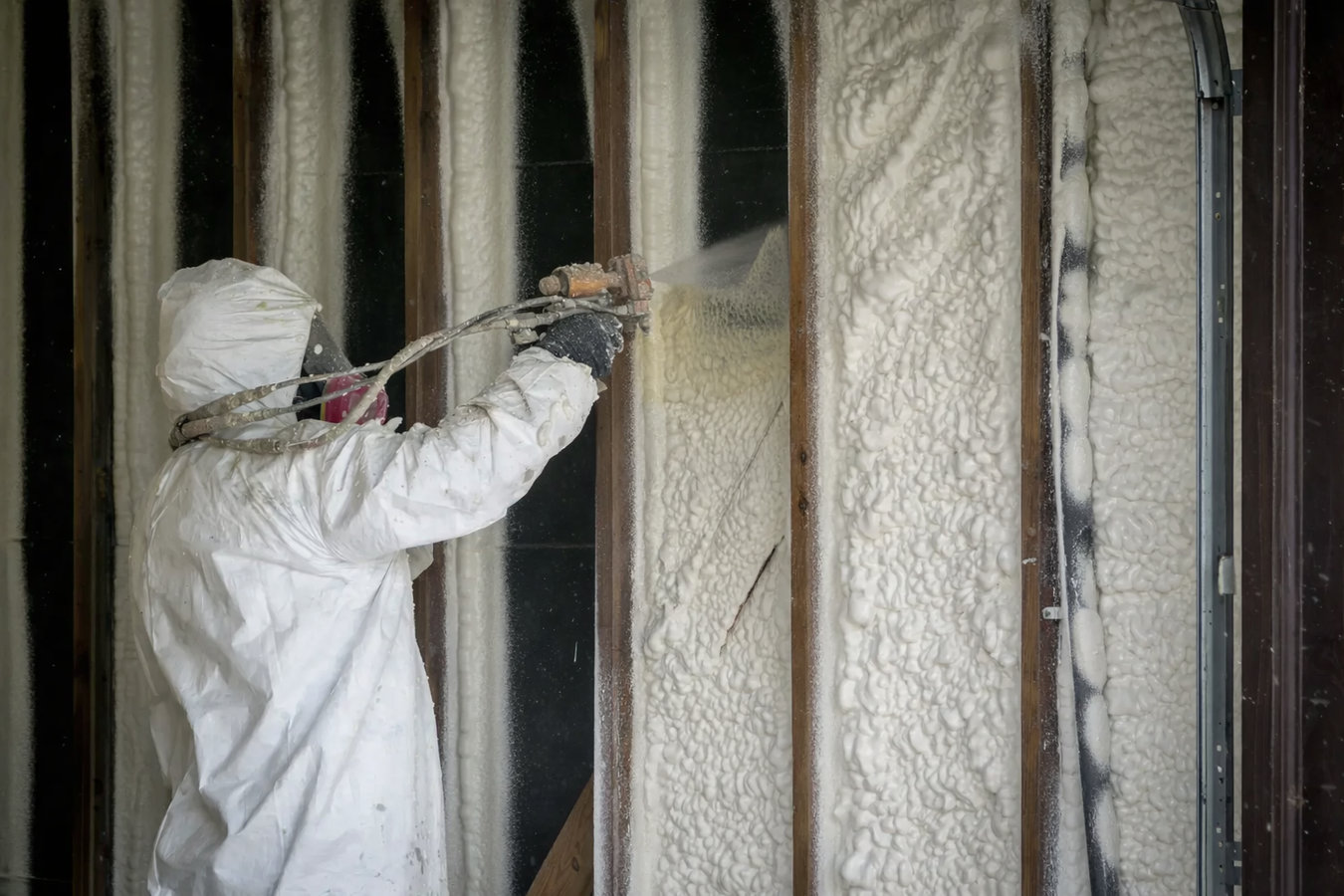
Spartanburg crawl spaces sit on red clay soil that holds water after every rainstorm, and open-vented crawl spaces on that kind of ground are under near-constant moisture pressure. Our spray foam insulation applied to crawl space walls and rim joists creates a sealed envelope that stops both air leakage and ground moisture at the source, which is especially effective in the brick ranch homes that make up a large share of Spartanburg's housing stock.
With roughly 45% of Spartanburg homes built before 1970, a large share of attics in the city have original fiberglass batt or loose-fill insulation that has compressed well below current energy code requirements. Blown-in cellulose or fiberglass can be added directly over existing material without a full tear-out, which makes it a cost-effective way to restore attic performance in older Hub City homes without a major disruption.
Crawl space foundations are the norm throughout Spartanburg, and many of those spaces have exposed soil floors with no moisture control and aging fiberglass batts stapled to the floor joists that have sagged, absorbed moisture, or fallen entirely. Full basements are uncommon in this part of South Carolina, so crawl space work is one of the most common service calls we handle in the city.
Spartanburg summers bring average highs around 90 degrees with humidity that stays elevated well into the evening, and homes with thin attic insulation run their air conditioners far harder than a properly insulated home would need to. Many of the older bungalow and craftsman homes in neighborhoods like Converse Heights have low-pitch roof lines that make attic access challenging, and we have the right equipment to work in those tight spaces without cutting corners.
For Spartanburg crawl spaces where the primary problem is ground moisture rather than air leakage, a heavy-duty vapor barrier installed across the entire crawl space floor is often the most direct solution. The Piedmont clay soil under most Spartanburg homes stays damp well after rainfall ends, and an exposed soil floor without a barrier allows that moisture to evaporate into the wood structure above and degrade insulation from below.
Older homes in Spartanburg - particularly the wood-frame craftsman and two-story homes in in-town neighborhoods built in the early 1900s - often have significant air leakage at top plates, around chimneys, and at plumbing penetrations that bypasses the insulation entirely. Sealing those gaps before installing new insulation is the difference between a job that performs as expected and one that underdelivers despite the right material being in place.
Spartanburg sits in the Piedmont region of South Carolina, a hilly, rolling landscape between the Blue Ridge Mountains and the Coastal Plain. The terrain means many homes sit on sloped lots where drainage is inconsistent, and the red clay soil that runs through most of the Upstate holds water near the surface long after rain. Census data shows roughly 45% of Spartanburg's housing units were built before 1970, which means a very large share of the city's homes - from the craftsman bungalows in Converse Heights to the brick ranches throughout the mid-city neighborhoods - are at least 50 years old and were built well before modern energy codes existed. Those homes have real insulation needs that are different from newer construction, and a contractor who works in Spartanburg regularly already knows what to expect.
The climate creates demand for insulation services across every season. Summers are hot and humid, with average July highs around 90 degrees and humidity that compounds what air conditioners have to overcome in a home with thin or degraded attic insulation. The city receives about 50 inches of rain per year, and that rainfall, combined with clay soil that does not drain quickly, keeps crawl spaces under steady moisture pressure. Winters in Spartanburg are generally mild but do include freeze events from December through February - cold enough to stress homes with air leaks or inadequate insulation at the rim joist and foundation perimeter.
Our crew works on Spartanburg homes on a regular basis, and a large share of those jobs involve crawl space or attic work on the city's older brick ranch and wood-frame housing stock. We pull permits as needed from the City of Spartanburg Development Services office, and we know the difference between what a 1920s craftsman in Converse Heights needs versus what a vinyl-sided subdivision home built in 2005 near Greer requires - they are not the same job, and treating them the same produces poor results.
Getting around Spartanburg is straightforward. Whether a job is in one of the older neighborhoods near Wofford College, in a mid-city ranch neighborhood off Reidville Road, or in a newer subdivision toward the Greer and Boiling Springs corridor along I-85, we know the city's layout and can reach any neighborhood without issue. Spartanburg Regional Healthcare System is one of the city's largest employers and is a familiar landmark for navigating the eastern side of the city.
We also serve homeowners in Greenville, which is about 30 miles west on I-85 and shares the same Piedmont clay soil conditions and a similar mix of older and newer housing. If your home is anywhere along that corridor - or in communities between Spartanburg and Greenville like Duncan or Lyman - we can reach you routinely.
We ask a few questions about your home - what you are noticing, the age of the house, and which area needs attention. We reply within 1 business day and can usually schedule an on-site visit within a few days of that first conversation.
A technician inspects the attic, crawl space, or other area of concern, notes any existing moisture problems or degraded insulation, and provides a written line-item estimate with no hidden costs. The assessment tells you exactly what is there and what it would take to bring it up to current standards.
Most Spartanburg jobs - a blown-in attic upgrade, a crawl space spray foam application, or a vapor barrier installation - are completed in a single day. Larger projects combining multiple services may take two days, confirmed in writing before we start.
We walk you through the completed work so you can see exactly what was done before we pack up. If anything does not meet your expectations, we address it before closing out the job - not after.
We serve Spartanburg homeowners across the city - from Converse Heights to neighborhoods near Greer. No pressure, no surprise charges: just a written estimate and honest work.
(803) 859-8329Spartanburg - known locally as Hub City, a nickname earned when the city was a major railroad junction - sits in the Piedmont region of northwestern South Carolina with a city population of around 40,000 and a broader metro area of over 300,000. The city has a compact, walkable downtown with older in-town neighborhoods like Converse Heights and Hampton Heights, where homes date back to the early 1900s and feature craftsman bungalows, colonial-style houses, and wood-frame two-stories. Mid-city neighborhoods from the 1950s through the 1970s are dominated by brick ranch homes on crawl space foundations, while the outer parts of the city and surrounding Spartanburg County have newer vinyl-sided subdivisions built from the 1990s onward. Wofford College, founded in 1854, anchors one of the city's well-established residential districts and is a familiar landmark for anyone who has spent time in Spartanburg.
The city is part of the broader Upstate South Carolina manufacturing corridor, home to facilities connected to BMW, Michelin, and Spartanburg Regional Healthcare System, among others. That stable employment base means many Spartanburg homeowners are long-term residents who take care of their properties - and who need contractors who give them straight answers and fair pricing. Homeowners in nearby Rock Hill face a very similar housing stock and climate, and we serve both communities as part of our regular service area. The U.S. Census Bureau quick facts for Spartanburg confirm that the city's housing is older and more diverse in type than many surrounding suburban communities, which is consistent with what we see in the field every day.
High-performance spray foam that air-seals and insulates in one application.
Learn moreKeep conditioned air inside your home with proper attic insulation coverage.
Learn moreLoose-fill insulation that fills gaps and irregular spaces evenly and efficiently.
Learn moreWhole-home insulation solutions tailored to your structure and energy goals.
Learn moreSafe removal of old, damaged, or contaminated insulation before reinstallation.
Learn moreProtect your floors and pipes from moisture and cold with crawl space insulation.
Learn moreSeal drafts and air leaks that drive up energy bills and reduce comfort.
Learn moreInsulate basement walls and rim joists to improve comfort and efficiency.
Learn moreDense, rigid foam providing the highest R-value per inch with moisture resistance.
Learn moreLightweight, flexible foam ideal for interior walls and sound dampening.
Learn moreCommercial-grade insulation for offices, warehouses, and industrial buildings.
Learn moreHeavy-duty vapor barriers that block ground moisture from entering your home.
Learn moreProfessional vapor barrier installation for crawl spaces and basements.
Learn moreAdd insulation to existing walls and structures without major renovation.
Learn moreServing these cities and communities.
Whether your home is in Converse Heights, a mid-city brick ranch, or a newer subdivision near Greer, call us now and we will respond within 1 business day with a written estimate - no obligation.