Loading...
Sumter Insulation serves Wilmington, NC homeowners with crawl space insulation, spray foam, and attic upgrades - experienced with coastal and Historic District homes, and responding to every inquiry within 1 business day.
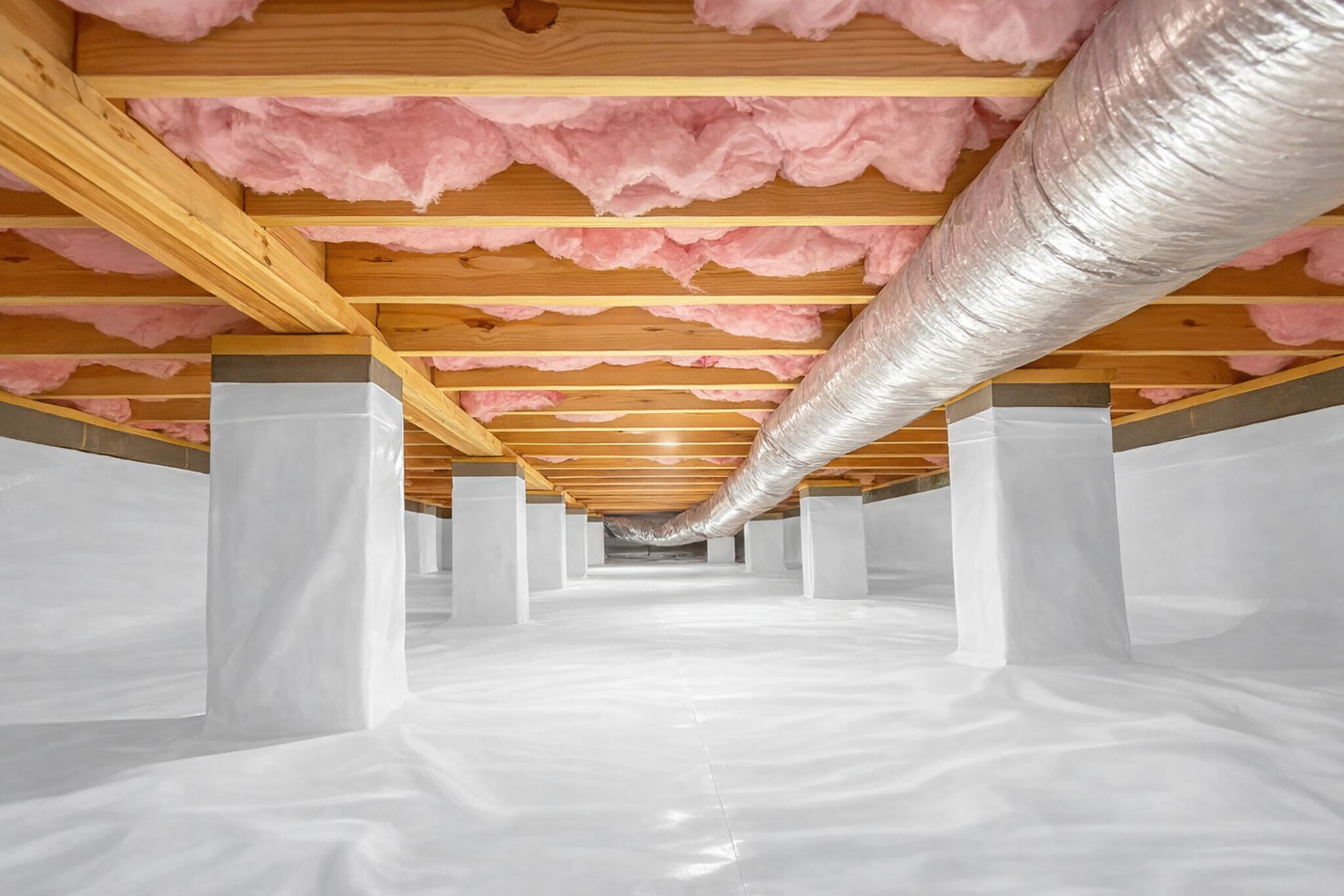
Wilmington sits just 12 miles from the Atlantic and averages 57 inches of rain per year, and both of those facts show up directly in crawl spaces across the city. Our crawl space insulation work addresses the moisture, air movement, and degraded fiberglass batts that are common in Wilmington homes - from the low-clearance crawl spaces under Historic District houses to the larger enclosures under mid-century Midtown ranches.
For Wilmington homes near the Cape Fear River, Intracoastal Waterway, or tidal creeks, closed-cell spray foam applied to crawl space walls and rim joists creates the kind of air and moisture barrier that standard fiberglass or blown-in material cannot match in a high-humidity coastal environment. It also adds structural rigidity to the foundation framing, which matters in an area that sees direct hurricane landfalls.
Wilmington summers run hot and humid from May through September, with average highs in the low 90s, and any attic with insufficient insulation becomes a heat sink that drives air conditioning costs up steadily. Homes in the Midtown area - Forest Hills, Sunset Park, and nearby streets - have attics that are 50 to 70 years old and rarely at current insulation depth, making attic upgrades one of the most direct ways to reduce energy bills in this part of the city.
In Wilmington's flat, low-lying terrain, groundwater stays close to the surface year-round, and after the area's frequent heavy rain events it can be even closer. A heavy-duty vapor barrier installed across the full crawl space floor is the baseline protection for any Wilmington home with an exposed soil crawl space - and it is the prerequisite step before any insulation investment makes sense.
For Wilmington attics where the existing framing is intact but the insulation has dropped well below current code depth, blown-in material added over what is already there is the most cost-effective upgrade path. This approach works particularly well in the post-WWII ranch homes throughout Midtown and the newer subdivisions in the Porters Neck and Ogden corridors where access is reasonable and removal is not necessary.
Wilmington's coastal humidity means that any unsealed penetration between the living space and the crawl space or attic is a path for humid exterior air to enter the home and raise interior moisture levels year-round. In older Historic District homes with original wood framing and no continuous air barrier, sealing top plates, rim joists, and recessed light penetrations is often the single change that makes the biggest difference in comfort and HVAC load.
Wilmington is the largest city in southeastern North Carolina and one of the wettest cities on the East Coast, averaging around 57 inches of rain per year. The city sits on flat, sandy coastal plain just 12 miles from the Atlantic, and the combination of high rainfall, a shallow water table, and frequent tropical weather systems creates moisture conditions that are unlike anything an inland contractor deals with regularly. Homes here - whether a Victorian in the Historic District, a brick ranch in Midtown, or a vinyl-sided subdivision home in Porters Neck - all contend with elevated ambient humidity for most of the year and with the specific threat of tropical storm water intrusion several times per decade. Hurricane Florence made a direct landfall near Wilmington in September 2018 and caused catastrophic flooding throughout the area, affecting crawl spaces, foundations, and floor systems in homes that had never experienced that level of water exposure.
The city also has one of the largest historic districts in North Carolina, covering roughly 230 blocks and containing hundreds of homes built before 1940. These wood-frame houses were constructed with materials and techniques that predate modern moisture management, vapor barriers, and energy codes. An insulation contractor working in Wilmington needs to know how to work with older framing, original brick foundations, and limited crawl space clearances that newer suburban homes never present. The newer subdivisions in Ogden, Murrayville, and the Monkey Junction corridor are also entering the age where original insulation is failing and HVAC systems are being replaced - which means insulation upgrades are increasingly on the list for those neighborhoods too.
Our crew works on Wilmington homes regularly, and much of that work involves the older crawl space construction that is common throughout the city's established neighborhoods. The Wilmington Historic Preservation office covers roughly 230 blocks of some of the oldest residential construction in North Carolina, and homes in that district - primarily Victorian, Queen Anne, and Italianate styles with original wood framing and brick foundations - have crawl space conditions that require a different approach than standard suburban insulation work. Low clearances, brick pier foundations, and original wood sills that have been absorbing moisture for over a century are standard on those jobs.
Getting around Wilmington is straightforward whether work is in the Historic District near the Riverwalk, in a Midtown neighborhood like Forest Hills or Sunset Park, or out in the newer subdivisions near the University of North Carolina Wilmington campus. The city is bordered by the Cape Fear River to the west and tidal waterways in every direction, which means almost every Wilmington neighborhood has some coastal moisture exposure - we factor that in on every assessment. We also serve homeowners in Florence, SC, about two hours southwest, which has its own concentration of older brick housing and crawl space moisture challenges.
We also reach homeowners in the communities surrounding Wilmington - Leland, Ogden, Porters Neck, and areas near Wrightsville Beach - as part of our regular service area. If your home is anywhere in the New Hanover County area and you are seeing signs of crawl space moisture, high energy bills, or rooms that stay uncomfortable despite normal HVAC operation, those are the kinds of problems we diagnose and fix every day.
Reach out by phone or through our contact form and describe what you are seeing - high bills, moisture in the crawl space, rooms that won't stay comfortable. We reply within 1 business day and schedule an on-site visit at a time that works for you.
We walk through the home, check the attic, crawl space, and any areas you are concerned about, and measure current insulation depth and condition. There is no charge for the assessment, and we provide a written line-item estimate before leaving - no surprise costs later.
Most Wilmington insulation jobs are completed in a single day. Crawl space work typically requires the homeowner to have a clear path to the access hatch, but you do not need to be home during the job itself once access is confirmed.
When the work is done, we walk through what was installed, where it was installed, and what to watch for going forward. You receive documentation of the completed work, including material type, R-value achieved, and any follow-up items we noted during the job.
We serve Wilmington, NC homeowners with no-cost on-site assessments and written estimates. No obligation, no upselling - just an honest look at what your home needs.
(803) 859-8329Wilmington is the largest city in southeastern North Carolina, with a city population of around 120,000 and a metro area exceeding 280,000. It sits on the Cape Fear River, roughly 12 miles from the Atlantic Ocean, and its location has shaped both its character and its housing stock. The city of Wilmington has one of the largest urban historic districts in North Carolina, encompassing hundreds of homes built before 1940 in Victorian, Queen Anne, and Craftsman styles. Neighborhoods like Brooklyn Arts District, Carolina Place, and the streets immediately south of downtown represent some of the most architecturally significant residential blocks in the state, with properties that demand careful, material-appropriate maintenance work. The Riverwalk along the Cape Fear River is one of the most recognized landmarks in the region and anchors the city's revitalized downtown.
Beyond the historic core, Wilmington's housing stock spans nearly every era of American residential construction. Midtown neighborhoods like Forest Hills and Sunset Park are filled with mid-century brick ranches and split-levels built from the 1950s through the 1970s. The University of North Carolina Wilmington campus drives a high concentration of rental properties in the surrounding streets, while the rapidly growing northern and western suburbs - Porters Neck, Ogden, and the Monkey Junction corridor - contain subdivisions built from the 1990s through the present. Homeowners across the region dealing with crawl space moisture, high energy costs, or aging insulation can also find services nearby through our team in Myrtle Beach and along the broader coastal corridor.
High-performance spray foam that air-seals and insulates in one application.
Learn moreKeep conditioned air inside your home with proper attic insulation coverage.
Learn moreLoose-fill insulation that fills gaps and irregular spaces evenly and efficiently.
Learn moreWhole-home insulation solutions tailored to your structure and energy goals.
Learn moreSafe removal of old, damaged, or contaminated insulation before reinstallation.
Learn moreProtect your floors and pipes from moisture and cold with crawl space insulation.
Learn moreSeal drafts and air leaks that drive up energy bills and reduce comfort.
Learn moreInsulate basement walls and rim joists to improve comfort and efficiency.
Learn moreDense, rigid foam providing the highest R-value per inch with moisture resistance.
Learn moreLightweight, flexible foam ideal for interior walls and sound dampening.
Learn moreCommercial-grade insulation for offices, warehouses, and industrial buildings.
Learn moreHeavy-duty vapor barriers that block ground moisture from entering your home.
Learn moreProfessional vapor barrier installation for crawl spaces and basements.
Learn moreAdd insulation to existing walls and structures without major renovation.
Learn moreServing these cities and communities.
Call Sumter Insulation today or submit a request online - coastal homes need the right contractor, and the sooner the crawl space and attic are addressed, the less damage accumulates.